

Double Dutch Injury Support in Edmonton is designed for competitive and recreational athletes who rely on speed, timing, and lower-body power—and who need focused care to manage pain and return to peak performance. At Performance Chiropractor + Physiotherapy in Edmonton, we assess how repetitive jumping, rapid ground contact, and high training volumes affect your feet, ankles, knees, hips, and spine. If you are dealing with shin pain, Achilles tightness, knee irritation, or recurring back discomfort, our integrated approach targets the root mechanical causes, not just symptoms, so you can train with confidence. Book an assessment and take the next step toward a stronger, more resilient return to sport.

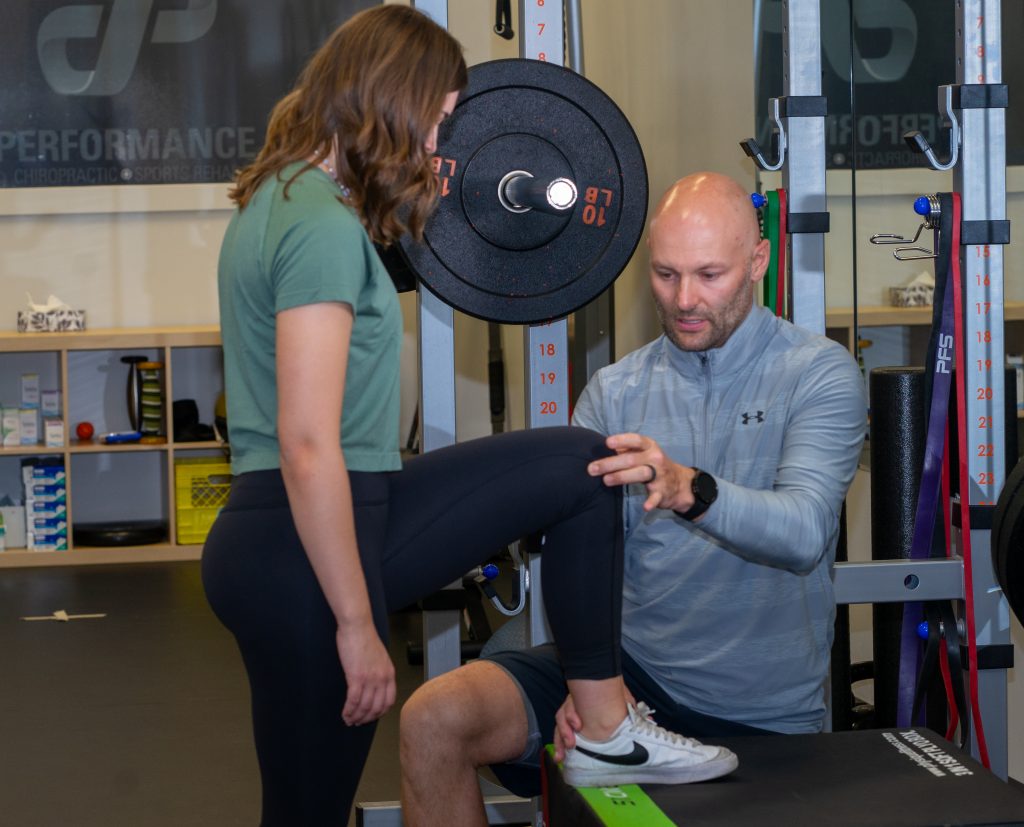
Your care begins with a detailed history and movement assessment, including analysis of squat, hop, and landing mechanics, ankle mobility, hip strength, and core control. When appropriate, we use functional testing to gauge tendon capacity and asymmetries. Treatment may include joint mobilization or manipulation to restore range of motion, soft tissue techniques to address myofascial restriction, and progressive therapeutic exercise emphasizing eccentric and plyometric loading. We follow evidence-informed rehabilitation principles, including graded exposure and load management, to safely rebuild tissue tolerance. As pain decreases and capacity improves, we integrate sport-specific drills and coordination work to prepare you for full-intensity Double Dutch training.
Double Dutch places unique demands on the body: repeated plyometric loading, rapid directional changes, and precise timing between partners and ropes. These forces create high ground reaction loads that travel from the foot upward, stressing tendons, joints, and the lumbar spine. When technique, strength, or recovery capacity fall out of balance, tissues become overloaded. Understanding the specific mechanisms behind these injuries is the first step in resolving pain and preventing recurrence.
Each jump produces a rapid stretch-shortening cycle in the calf complex and Achilles tendon. Without adequate eccentric strength and tendon capacity, microstrain accumulates faster than the tissue can remodel. This often presents as Achilles tendinopathy, plantar fascia irritation, or shin splints. Early symptoms may feel like morning stiffness or pain that eases with warm-up, but ignoring these warning signs increases the risk of partial tears or chronic degeneration.
Poor shock absorption—such as landing with stiff knees, excessive knee valgus, or limited ankle dorsiflexion—shifts load to the patellar tendon and anterior knee structures. Over time, this can lead to patellofemoral pain or jumper’s knee. In Double Dutch, where rhythm and speed are critical, athletes may sacrifice mechanics for timing, compounding joint stress with every repetition.
The ropes may spin at the hands, but force generation and control start at the hips and trunk. Weak gluteal muscles or poor lumbopelvic stability reduce efficient force transfer, increasing strain on the lower back and hamstrings. Athletes may experience tightness, recurring strains, or mechanical low back pain linked to inadequate proximal stability during high-frequency jumps.
Sudden increases in practice intensity, hard training surfaces, or worn footwear alter load distribution through the kinetic chain. Hard floors amplify ground reaction forces, while inadequate shoe support can increase pronation stress. Without structured load management, even well-conditioned athletes can exceed tissue tolerance and develop overuse injuries.
Working with a qualified chiropractor and physiotherapist ensures your care plan matches the specific biomechanical demands of your sport. You receive a clear diagnosis, a progressive loading program to rebuild tendon and muscle capacity, manual therapy to reduce pain and improve mobility, and sport-specific drills that retrain landing mechanics and timing. The result is measurable improvement in strength, jump efficiency, and pain tolerance, along with a structured return-to-sport plan that reduces the likelihood of re-injury.
Timelines depend on the tissue involved and how long symptoms have been present. Mild tendon irritation caught early may improve within several weeks of structured loading, while chronic tendinopathy or recurrent strains can require a few months of progressive rehab. Consistency with exercises and appropriate training modification significantly influence recovery speed.
In most cases, complete rest is not necessary and can reduce conditioning. Instead, we adjust intensity, volume, or drill selection to keep you active while protecting irritated tissues. Strategic load management allows healing without losing sport-specific fitness.
Yes. This service focuses specifically on the biomechanical and performance demands of Double Dutch. Assessment and rehab are tailored to repetitive plyometrics, rope timing, and partner coordination, rather than using a generic lower-body program.
If you are unsure whether your pain is “serious enough” or are frustrated by recurring symptoms, an assessment can clarify the cause and outline a practical plan. We will explain findings in plain language, discuss expected costs and visit frequency, and set realistic milestones for return to full training. Early, sport-specific intervention often shortens recovery and protects long-term performance, so you can keep progressing with confidence.