

Scootering injuries can sideline even the most dedicated athlete, whether you ride for commuting, tricks, or competition in Edmonton. At Performance Chiropractor + Physiotherapy, we provide focused assessment, pain relief, and progressive rehab to help you recover from falls, overuse strains, and impact injuries so you can return to riding with confidence and control. If pain, stiffness, or instability is holding you back, our team is ready to help you move forward safely.

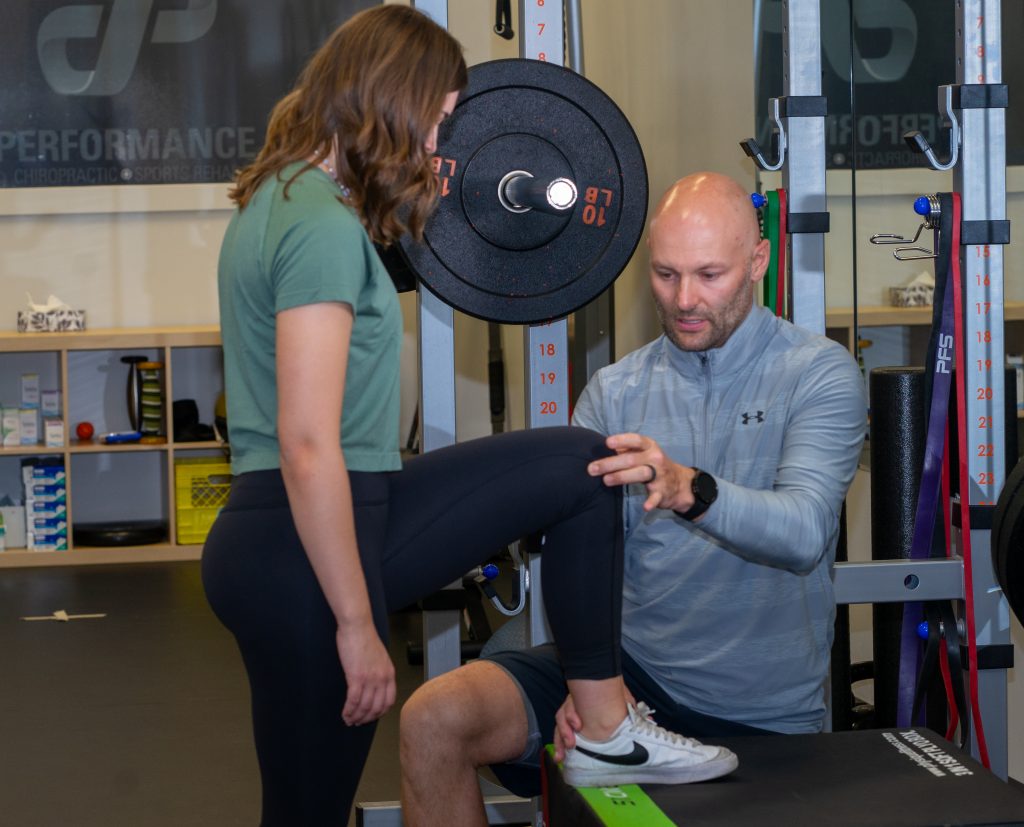
Your care begins with a detailed history and movement assessment, including joint range of motion, strength testing, balance evaluation, and analysis of riding-related mechanics. When indicated, we screen for red flags that may require imaging or medical referral. Treatment may include manual therapy such as joint mobilization or soft tissue techniques to reduce pain and restore motion, combined with progressive exercise therapy targeting ankle stability, hip strength, core control, and landing mechanics. We use evidence-informed rehabilitation principles, including graded loading and sport-specific progression, to ensure tissues adapt safely to increasing demands. As symptoms improve, drills simulate push-off force, impact absorption, and balance challenges so your return to riding is deliberate and performance-focused rather than rushed.
Scootering places unique demands on the wrists, ankles, knees, and spine. Repetitive pushing, high-impact landings, and sudden falls create predictable injury patterns that, if not treated correctly, can become chronic limitations. Understanding the mechanisms behind these injuries is the first step in resolving them fully and reducing the risk of recurrence.
Trick attempts, uneven pavement, and loss of balance commonly lead to falls onto outstretched hands, shoulders, or hips. This mechanism often results in wrist sprains, shoulder strains, clavicle irritation, or contusions around the hip and thigh. Even when fractures are ruled out, ligament sprains and joint irritation can cause lingering pain and reduced stability if not properly rehabilitated.
The repeated push-off motion loads the ankle, Achilles tendon, knee, and hip flexors on the driving leg. Over time, this can lead to tendon irritation, patellofemoral pain, or hip flexor strain, particularly when training volume increases quickly. Without correcting load management and movement mechanics, athletes often experience recurring flare-ups.
Landing jumps transmits force through the ankles, knees, and spine. Inadequate shock absorption, limited ankle mobility, or weak hip control can increase compressive stress on the lumbar spine and knee joints. This may contribute to low back pain, facet joint irritation, or meniscal stress when mechanics are not optimized.
Many riders attempt to “ride through” pain or rely solely on rest. While symptoms may temporarily settle, underlying deficits in strength, balance, or joint control remain. Returning to full activity too quickly can prolong recovery timelines and increase the likelihood of reinjury, especially in high-skill manoeuvres.
Working with a qualified chiropractor and physiotherapist provides structured pain reduction, restoration of mobility, and progressive strength training tailored to scootering demands. Athletes can expect clearer timelines, objective re-testing of strength and control, and a staged return-to-ride plan that reduces fear and uncertainty. The result is not only symptom relief, but improved landing mechanics, better joint stability, and greater confidence when returning to tricks, commuting, or competition.
Recovery time depends on the severity and type of injury. Mild sprains or strains may improve within a few weeks with guided rehab, while more significant ligament or tendon injuries can require several months of progressive loading. Early assessment generally shortens overall recovery by addressing contributing factors from the start.
Not always. Many soft tissue injuries can be assessed clinically through a thorough physical examination. If your presentation suggests a fracture, significant instability, or another condition requiring imaging, we will advise you and coordinate appropriate referral within Edmonton.
In many cases, modified riding is possible. We provide clear parameters around intensity, duration, and types of manoeuvres to avoid so that you maintain conditioning without overloading healing tissues. The goal is progressive return, not complete deconditioning unless medically necessary.
If you are dealing with wrist pain after a fall, persistent ankle soreness, or low back discomfort from repeated landings, early and structured intervention can make a meaningful difference. Scootering Injury Support in Edmonton at Performance Chiropractor + Physiotherapy is designed to help athletes recover fully, rebuild capacity, and return to their sport stronger and more resilient.