

For competitive and recreational athletes in Edmonton, this service is designed to assess, treat, and rehabilitate sport-specific pain related to throwing, jumping, rapid direction changes, and repetitive impact against the rebound frame. Whether you are dealing with shoulder strain, knee pain, ankle sprains, or lingering low back tightness, our team at Performance Chiropractor + Physiotherapy focuses on restoring movement quality, reducing pain, and guiding you safely back to play. If your performance is limited by discomfort or repeated injuries, we are here to help you recover with a plan built around the demands of your sport.

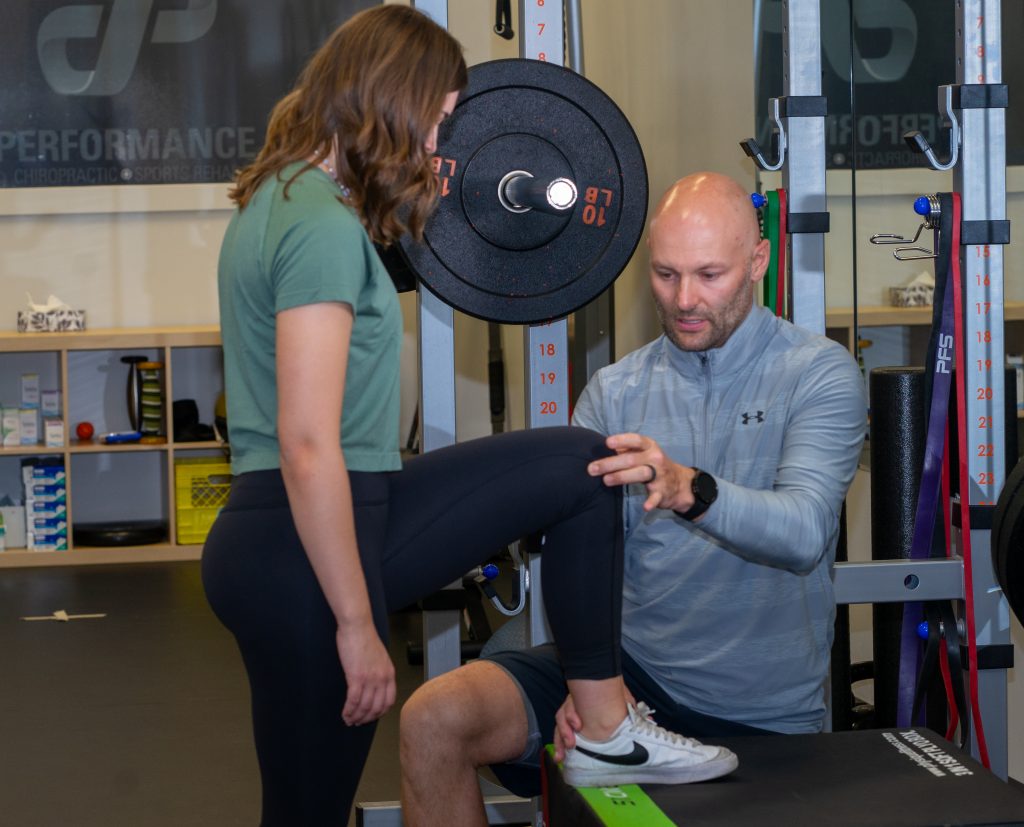
Your care begins with a detailed history and sport-specific assessment, including analysis of throwing mechanics, landing patterns, single-leg stability, range of motion, and strength testing. We identify movement faults and load-management issues that contribute to pain. Treatment may include manual therapy such as joint mobilization or soft tissue techniques to restore mobility, combined with progressive exercise therapy targeting the rotator cuff, scapular stabilizers, core, hips, and lower limbs. We use evidence-informed rehabilitation principles, including graded exposure to sport-specific drills, to rebuild tolerance safely. As symptoms improve, we integrate plyometrics, agility work, and return-to-play criteria so you can transition confidently back into full competition.
The fast-paced nature of this rebound sport places unique mechanical demands on the shoulders, knees, ankles, and spine. High-velocity throws, abrupt stops before shooting, defensive pivots, and repeated landings create cumulative load on joints and soft tissues. Without adequate mobility, strength, and neuromuscular control, these loads can exceed tissue capacity, leading to irritation, strain, or more significant injury.
Overhead and side-arm throws generate high rotational forces through the shoulder and elbow. If the thoracic spine is stiff or the rotator cuff and scapular stabilizers are weak, the shoulder joint absorbs more stress than it should. This can contribute to rotator cuff tendinopathy, labral irritation, or medial elbow strain. Athletes often notice pain during acceleration or follow-through, reduced throwing speed, or lingering soreness after games.
Repeated jumping and quick deceleration before releasing the ball increase load through the patellar tendon and knee joint. Poor landing mechanics, limited ankle dorsiflexion, or hip weakness can shift force disproportionately to the front of the knee. Over time, this may lead to patellar tendinopathy, runner’s knee–type symptoms, or swelling that worsens with practice intensity.
Rapid cutting and defensive shuffles challenge ankle stability, especially on indoor courts where grip is high. A previous sprain that was not fully rehabilitated can leave residual ligament laxity and delayed peroneal muscle activation. This increases the risk of re-sprain, chronic instability, and compensatory stress up the kinetic chain into the knee and hip.
Explosive rotation and extension during shooting place shear and compressive forces on the lumbar spine. If core endurance and hip mobility are insufficient, the lower back may compensate. Athletes may experience stiffness after games, sharp pain with twisting, or discomfort that limits full-speed play.
Working with a clinician who understands the biomechanics of this sport means your care plan targets the true driver of symptoms rather than just masking pain. Treatment aims to restore joint mobility, improve muscle activation timing, and progressively increase tissue capacity so you can tolerate game-speed loads. The result is more confident movement, improved throwing power and landing control, fewer flare-ups during the season, and a lower likelihood of recurring injury.
Timelines depend on the type and severity of the issue, your training load, and how consistently you follow the rehabilitation plan. Mild strains or early tendon irritation may improve within a few weeks, while more persistent conditions or significant sprains can take several weeks to a few months. Our focus is not only on pain reduction but also on restoring full function before clearing you for unrestricted play.
In many cases, yes. Rather than complete rest, we often modify intensity, volume, or specific drills to keep you active without aggravating the injury. Strategic load management helps maintain conditioning while allowing irritated tissues to recover, which is especially important during the competitive season.
Imaging is not always necessary for common overuse injuries or mild sprains. A thorough clinical assessment often provides sufficient information to guide care. If red flags or signs of more serious structural damage are present, we will recommend appropriate medical referral or imaging as needed.
Athletes often ask about cost, session frequency, and what to expect at the first visit. Fees depend on assessment complexity and treatment time, and we will outline a clear plan after your initial evaluation. Early sessions are typically closer together to control pain and restore mobility, followed by more spaced appointments as you progress into strength and performance phases. Wear athletic clothing for assessment and be prepared to move. Our goal at Performance Chiropractor + Physiotherapy is to provide transparent, evidence-based care that helps you return to the court stronger and more resilient.