

High-impact landings, awkward rebounds, and repetitive jumps can overload your spine and joints in seconds. At Performance Chiropractor + Physiotherapy, we provide focused care for athletes in Edmonton who need expert assessment, pain relief, and structured rehabilitation after trampoline-related injuries. Whether you are a competitive gymnast, freestyle athlete, or recreational jumper, our approach targets the true source of pain and rebuilds strength, control, and confidence so you can return to training safely. Book an assessment to start a clear, sport-specific recovery plan.

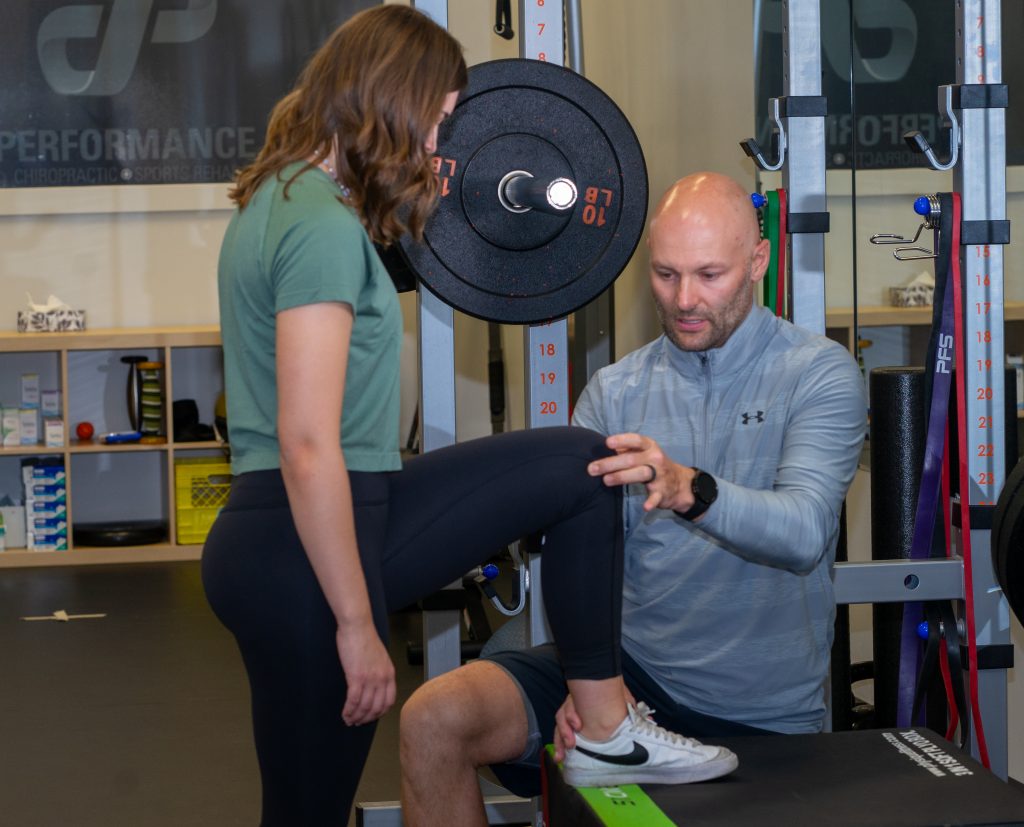
Your care begins with a detailed assessment of injury history, training volume, biomechanics, and strength imbalances. We evaluate joint mobility, neuromuscular control, landing mechanics, and tissue irritability to identify the primary pain driver. Treatment may include targeted manual therapy to restore joint motion, soft tissue techniques to address muscle guarding, progressive loading programs for tendons, and corrective exercises to improve trunk and lower limb stability. Where appropriate, we integrate movement retraining, plyometric progressions, and return-to-skill drills aligned with sport demands. Education on load management, warm-up structure, and recovery strategies supports long-term resilience.
Trampoline injuries are rarely random. They typically result from predictable biomechanical forces, training errors, or inadequate recovery. Understanding how these injuries occur helps guide effective treatment and reduces the risk of recurrence.
Each jump creates vertical acceleration followed by rapid deceleration on landing. If trunk stability or landing mechanics are compromised, compressive and shear forces increase through the lumbar spine and sacroiliac joints. This can lead to facet irritation, disc strain, or stress reactions, particularly in athletes performing repeated high-amplitude skills.
The elastic surface demands constant neuromuscular control. When timing or proprioception is off, athletes may land in excessive inversion, valgus, or hyperextension. This mechanism commonly contributes to lateral ankle sprains, patellofemoral pain, meniscal irritation, or ligament strain, especially during fatigued sessions.
Flips and twists introduce rotational torque. Under-rotating or over-rotating increases load on the cervical spine, shoulders, and hips. Acute injuries such as cervical strain, shoulder subluxation, or hip flexor tears often occur when technical progression outpaces strength and control.
Even without a single traumatic event, repetitive jumping can exceed tissue capacity. Tendons, particularly the patellar and Achilles tendons, respond poorly to sudden spikes in volume. Without load management, athletes may develop tendinopathy, shin pain, or chronic low back tightness that gradually limits performance.
Working with a qualified provider ensures more than symptom relief. A comprehensive plan restores joint mobility, corrects faulty landing mechanics, rebuilds tendon capacity, and retrains sport-specific control. Athletes typically experience reduced pain, improved power transfer, better aerial awareness, and increased confidence during takeoff and landing. Objective strength and functional testing guide return-to-sport decisions, reducing the likelihood of re-injury and helping you resume full training with measurable readiness.
Timelines depend on injury type, severity, and training demands. Mild sprains or strains may improve within a few weeks with consistent rehabilitation, while tendon or spinal conditions can require a structured program over several months. Early assessment generally shortens recovery by addressing the true source of overload.
Not always. In many cases, modified training that avoids aggravating movements is preferable to full rest. Strategic load reduction combined with targeted rehab maintains conditioning while allowing tissues to heal. Your plan will outline what to continue, what to pause, and when to progress.
Sport-specific analysis is critical. Trampoline athletes experience unique vertical and rotational forces, so rehabilitation must reflect those demands. We incorporate landing mechanics, plyometric control, and progressive return-to-skill testing rather than relying solely on basic strengthening.
Athletes often ask about cost, imaging, and when to seek care. Fees vary based on assessment and treatment duration, and we provide clear recommendations after your evaluation. Imaging such as X-ray or MRI is only suggested if clinical findings indicate structural concern or if progress stalls. You do not need a referral to begin care in Edmonton. If pain persists beyond a few days, limits training, or recurs with jumping, early intervention helps prevent chronic patterns and keeps your season on track.