

Wheelchair Basketball Injury Support in Edmonton is designed for competitive and recreational athletes who rely on speed, power, and precision on the court but are held back by shoulder pain, wrist strain, neck tension, or overuse injuries. At Performance Chiropractor + Physiotherapy in Edmonton, we combine sport-specific physiotherapy and chiropractic care to reduce pain, restore efficient propulsion mechanics, and help you return to play stronger and more resilient. If pain is limiting your training or performance, our team is ready to assess, treat, and guide your full recovery.
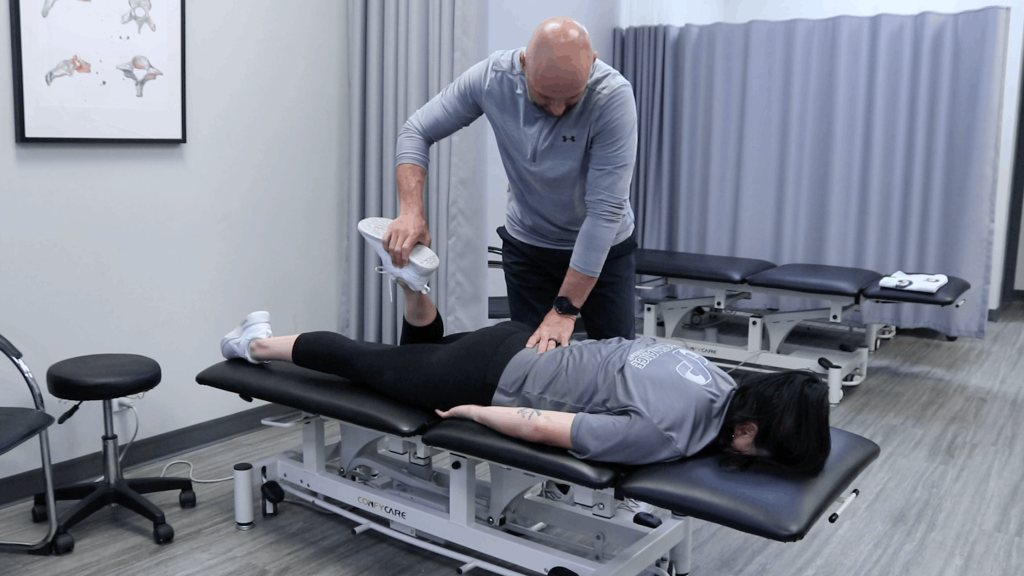
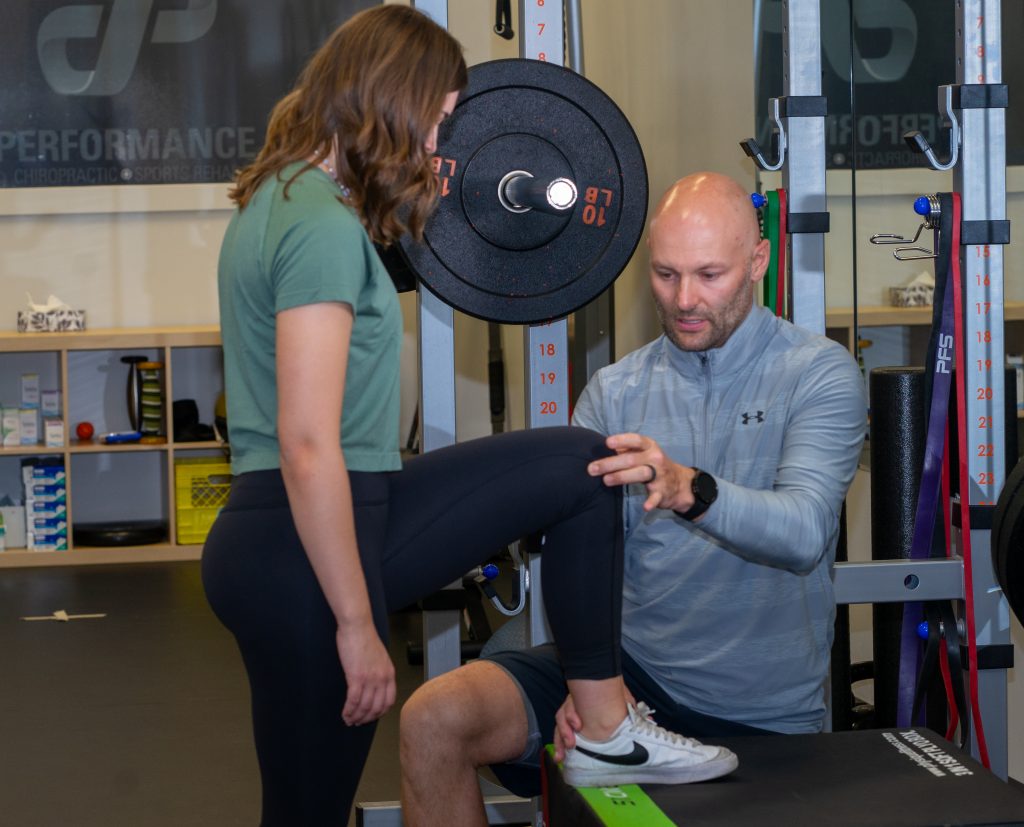
Your care begins with a detailed assessment of injury history, training volume, wheelchair setup, and on-court demands. We evaluate range of motion, strength ratios, scapular mechanics, trunk control, and propulsion technique. Treatment may include joint mobilization or manipulation where appropriate, soft tissue therapy, taping, and a structured rehabilitation plan based on progressive overload principles. We incorporate resistance bands, free weights, medicine balls, and sport-specific drills to replicate game demands safely. When needed, we collaborate with coaches or equipment specialists to optimize chair fit and ergonomics. Throughout rehab, we monitor pain response and functional benchmarks to guide a safe return-to-play progression.
Wheelchair basketball places unique mechanical demands on the upper body. Repeated high-force propulsion, rapid direction changes, contact, and overhead shooting create predictable stress patterns in the shoulders, elbows, wrists, and spine. Without targeted rehab and load management, minor irritation can progress to tendon pathology, joint instability, or chronic pain that limits performance and daily function. Early, sport-specific care helps reduce these risks and keeps you competitive through long seasons.
Propelling a sport wheelchair requires repeated shoulder flexion and internal rotation under load. Over time, this can narrow the subacromial space and irritate the rotator cuff tendons or bursa, especially if scapular control is limited. Athletes often notice pain with shooting or pushing uphill, which can signal tendinopathy rather than a simple strain. Addressing strength imbalances, thoracic mobility, and propulsion mechanics is key to reducing overload.
Quick stops, pivots, and ball handling demand strong wrist flexors and extensors to control the hand rims. Excessive gripping or poor wrist alignment can increase strain on the common extensor tendon, contributing to lateral elbow pain similar to tennis elbow. Without correction, this may progress to persistent tendon degeneration that responds poorly to rest alone and requires structured loading rehabilitation.
Collisions and tipping can result in acute injuries such as AC joint sprains, clavicle fractures, or cervical spine irritation. Even when imaging is clear, athletes may develop protective movement patterns that alter propulsion mechanics and increase strain elsewhere. A thorough assessment ensures that joint stability, neuromuscular control, and confidence are restored before full return to play.
Sustained forward-lean posture and high training volumes can fatigue trunk stabilizers, increasing stress on the lumbar and thoracic spine. Poor trunk control reduces force transfer from the core to the upper limbs, making the shoulders work harder. Over time, this contributes to mid-back stiffness, neck pain, and reduced shooting accuracy.
Working with a qualified provider helps reduce pain while improving propulsion efficiency, shooting mechanics, and upper-body power. Through progressive loading, manual therapy, and corrective exercise, athletes can rebuild tendon capacity, enhance scapular control, and improve trunk stability. The result is not only symptom relief but measurable gains in endurance, force production, and confidence during high-intensity play.
Timelines depend on the tissue involved and how long symptoms have been present. Mild tendon irritation may improve within several weeks of structured loading, while chronic tendinopathy or post-traumatic injuries can require a longer, phased rehabilitation approach. Consistency with your program significantly influences outcomes.
Not always. In many cases, we modify rather than eliminate training by adjusting intensity, volume, or specific drills. Strategic load management allows tissues to recover while maintaining conditioning and skills, reducing the risk of deconditioning during rehab.
No. Whether you compete at a national level or play recreationally in Edmonton, your injury risk and performance demands deserve specialized care. Treatment plans are tailored to your goals, schedule, and baseline conditioning.
If shoulder, wrist, or spinal pain is affecting your game, early assessment can prevent long-term setbacks. At Performance Chiropractor + Physiotherapy in Edmonton, we provide sport-specific evaluation, clear treatment plans, and practical rehab strategies designed for wheelchair basketball athletes. Book an appointment to move with less pain, train with purpose, and return to the court with confidence.